End of the line for the Lancer Evolution?
 Atty. Jerome G. Neri
The Scrutineer
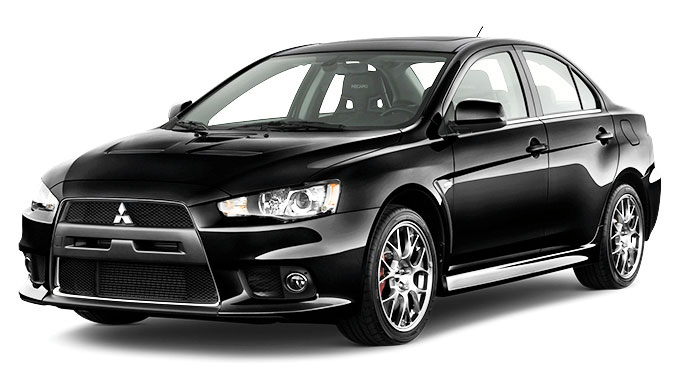
ACCORDING to some reports on the web and in social media, Mitsubishi has announced that they are discontinuing the Lancer Evolution line. If true, the Lancer Evolution X, launched in 2008 is the last Evo. Many car fans including me are sad to see the end of the most legendary car Mitsubishi has ever produced.
The Evolution line of Lancers began in 1993. Mitsubishi installed a twin cam turbocharged engine mated to an all wheel drive platform. The result was a compact sedan with supercar performance at an affordable price.
This also was Mitsubishi’s entry in the World Rally Championship (WRC). Immediately, the car became a frontrunner in the WRC. Finnish rally driver Tommy Makkinen won four consecutive WRC driver titles from 1996-1999. Turning out as their best year was 1998 when they also won the WRC constructor’s championship.
The Evolution’s success in the WRC made it a must-have car for every high-performance car enthusiast as it gained a cult following. The Evolution I thru VII was never sold in the United States market, but there was a clamor for the car to be sold in there that the Evolution VIII was eventually introduced in the US. After hitting the US market in 2003, it outperformed the Subaru WRX, prompting Subaru to introduce the WRX STI in 2004.
The Evolution immediately became a favorite of both DIY and professional tuners because with just small tweaks, insane horsepower could immediately be achieved, resulting in a flood of aftermarket tuning companies that developed plenty of go-faster parts for that car.
FIERCE RIVALRY. The high performance budget turbo all-wheel-drive platform is now left with one car, the Subaru WRX STI. The fierce rivalry between the Evolution and the WRX STI brought a lot of good to us consumers as both Mitsubishi and Subaru were pushing the development of their cars.
The AWD platform has its inherent understeer problem, which reduces cornering speed. Mitsubishi and Subaru were in a development race in removing the inherent problem. Mitsubishi went the electronic way while Subaru went the mechanical route.
The Evolution had what Mitsubishi called the Active Yaw Control (AYC). According to Wikipedia, the AYC “is based on a computer-controlled rear differential that can actively split torque based on input from various accelerometers in the vehicle, measuring longitudinal and lateral G forces, steering, brakes and throttle position.”
“Where ABS brakes are fitted they too are included in the input parameters. It accomplishes this via two hydraulic clutches which can limit torque on individual axles. This system should not be confused with stability control systems which utilize the braking system of a vehicle by individually braking certain wheels to rotate and slow the car (such as Electronic brakeforce distribution). AYC is a performance-oriented system which aims to increase cornering speeds,” Wikipedia added.
Subaru, on the other hand, developed the Driver Controlled Center Differential (DCCD), which is a system wherein the driver can adjust the power distribution between the front and the rear wheels in order to get the right balance.
Both solutions worked and have been continuously refined by both companies, such that the two cars always had very similar performance figures throughout the years. With the Evolution gone, I am afraid that Subaru might lose their reason to continue with the rapid development of the WRX STI.
I am just hoping that the demise of the Evolution is not the beginning of the end of well-priced high performance cars.