Twitter alterverse: Coping mechanism or prostitution? (Part 1 of 2)
By Adrian P. Nemes III
TWITTER is an American microblogging and social networking service on which users post and interact with messages known as “tweets.”
Data from statista.com, a German company specializing in market and consumer data, showed that the Philippines is the 12th country in the world with the most Twitter users, at 10.2 million as of October 2021.
Twitter’s managing director for Southeast Asia, Arvinder Gujral, in a statement, earlier said that entertainment, sports and news or public service announcements are considered the top three reasons why Filipinos and others use their social networking site.
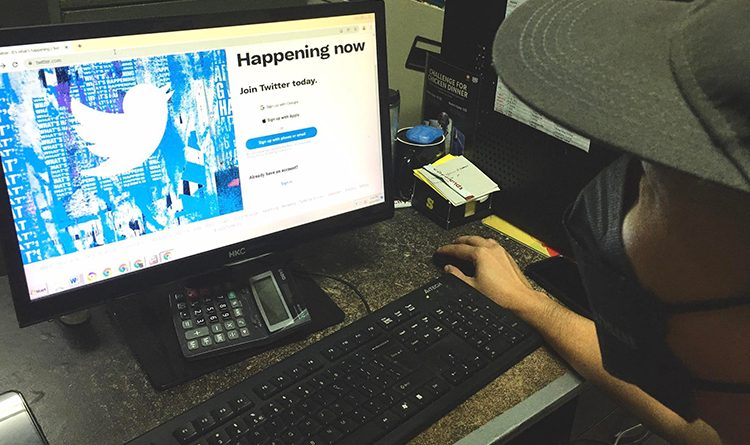
However, through the years, Twitter has now evolved from a simple social network site, or a source of information and entertainment, into a rendezvous of those individuals who assumed second or other identities known as “alters.”
Alter Pilipinas (@alterpilipinas) defines “alters” as “a pseudonym or second account used to express oneself including his or her sexual preferences and fantasies in a more discreet way without risking their true identity” to avoid the eyes of a judgmental society.
Among them is JB, not his real name, 25, who shared that he started as an “alter” last year during the onset of the coronavirus disease (Covid-19) pandemic because of boredom caused by restrictions.
Prior to this, JB already had a Twitter account which he used for information and socialization but after seeing videos posted by other “alters” on their Twitter accounts he got curious and did the same, he said.

Alterverse, as defined by Alter Pilipinas, is a community on Twitter marked by sexually explicit content allowing users to break free from the conservatism of society.
Outside the alterverse, JB works as a machine technician for a reputable company in Bacolod City.
What started as a curiosity, he said, later on became a trade where he would receive indecent proposals through direct messages (DM) in exchange for a hefty amount of money. Often, these proposals are difficult to ignore.
“I admit that I have fears that eventually my family or friends would know this or I may contract sexually transmitted diseases, but I don’t want to think about it yet,” he said.
He also posts his sexually explicit videos on his Twitter account and the payment in exchange for the access of these videos is sent through mobile wallets, mobile payments and other electronic banking services.
The price is usually not lower than P500, he said.
To better understand the dynamics in the Twitter alterverse, this writer decided to create my own account.
JB gave me some suggestions on how to draw followers saying that, “you don’t need to have the coolest or most unique name as long as you post videos or photos on it, then you’re good to go.”
Asked what videos or photos should I post he said, “you could post your naked photo, or a video while pleasuring yourself.”
But to be more exciting you can do a collaboration and record a sex video with other alters and post it on your account, he said, adding that, it is also important to interact with your followers and reply with those who send you DMs.
This writer followed JB’s suggestion and true enough a day after I created my own “alter account” and posted a sexy photo of myself, I got 10 instant followers.
I interacted with one of them, one with the user name “CDM”, an employee of a private firm in Bacolod City, who admitted that most of the “alters” in Twitter are looking for sex although not necessarily for pay.
For my other follower, Nico also not his real name, a college student, he used his alter account to prostitute himself so he will have some amount of money which he can use to spend for his education.
He calls himself a student by day and “alter” by night.
The rise of alterverse
While I was trying to trace the history of alter culture in the Philippines, I learned that it is said to be an off-shoot of the decision of Tumblr, another microblogging site, in December 2018 to ban porn and other explicit contents.
If you are going to dig deeper, you cannot actually find concrete evidence that it is indeed the reason why the number of “alters” on Twitter increased.
Still, it is logical to believe that users from that site looked for other venue when Tumblr disallowed pornography.
Almost a year after the restrictions were made by Tumblr, Twitter followed suit by announcing in November 2019 that it prohibits the posting of gory, violent or adult content.
Nonetheless, unlike Tumblr, Twitter gave a leeway by allowing these kinds of posts, that is, if the users or the owners of the account mark the media being posted as “sensitive.”
‘Society forced them’
For Social Studies master teacher Fritz Porras, partly, the society is to be blamed as to why some people are forced into creating a second or alter account on social media platforms like Twitter.
Porras explained that society sets the norms and when someone is doing what is beyond the norm, it will likely make her or him susceptible to criticisms and public judgement.
“In the Philippines, although the new generation is adept with the modern world, a large percentage of the population remains accustomed to being conservative,” Porras said.
“This is because the population is composed of residents who were born from the 80s to 90’s and on top of that, we were raised in Catholic teachings,” Porras also said.
He added that maybe, the family of these “alters” are conservative or religious leaving them without any choice but to hide their identities through their alter accounts so they could fulfil their desires.
What is sad, he said, is the reality that some of these “alters” have used their accounts to prostitute themselves in order to survive their daily needs.
For Porras, the rise of alter culture is reflective of the huge impact of social media to the youth and adults.
It has become a venue for others to do the things that they want outside the four walls of their house and school.
It could also be that the use of an “alter” is the way of others to protect themselves from bullying, especially if they are not confident of how they look, the social science teacher said.
Cybersex Law
Is posting explicit videos over the internet or on alter accounts legal?
Under Republic Act 10175, or the Cybercrime law, cybersex or the willful engagement, maintenance, control, or operation, directly or indirectly, of any lascivious exhibition of sexual organs or sexual activity, with the aid of a computer system, for favor or consideration is illegal.
Any person found guilty of cybersex shall be punished with imprisonment of prision mayor or an imprisonment of six years and one day to 12 years or may be fined of at least P200,000 but not exceeding P1 million.
The National Bureau of Investigation (NBI) and Philippine National Police (PNP) are the ones responsible for the efficient and effective enforcement of the law.
The NBI and PNP are also tasked to organize a cybercrime unit or center manned by special investigators to exclusively handle cases involving violations of this act.
But Major Sherlock Gabana, spokesperson of Bacolod City Police Office, admitted that they are having a hard time implementing the law and tracing the perpetrators considering that they lack the necessary training.
Gabana said that one should be experts in internet technology in order to implement the law.
In its aim to address this concern, the PNP has been recruiting information technology (IT) experts lately, he said.
“So far, in Bacolod City, we have not received or recorded incidents of commission of cybersex although we although there are recorded dismantling of suspected cybersex dens before,” he also said.
The police official warned any individuals not to engage in this illegal act.
(To be continued)