Micro cars and quality roads
 Atty. Jerome G. Neri
The Scrutineer
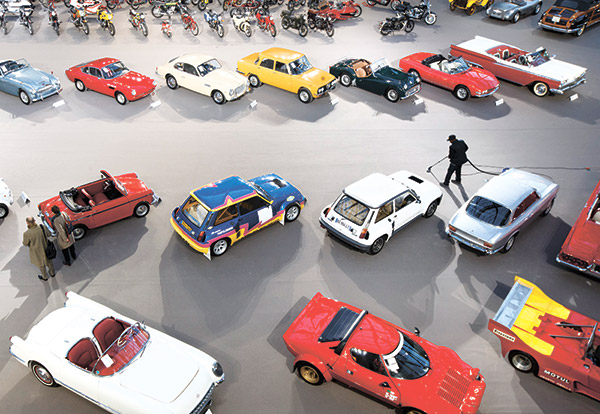
THE Federation of Auto Clubs Cebu held its annual Inter Auto Club Meet last Aug. 9 to10 at the parking lot of SM City, Cebu. This event was participated by all the major car clubs in Cebu. The number of car aficionados has grown leaps and bounds since the inception of the Federation. The car enthusiasts showed off classic cars to modern modified cars. There were cars that were slammed to the ground and pick-up trucks that were raised up high.
During the event, Group B Automotive and Tuning, together with Kartzone, hosted an inter-car club karting time attack battle. This event was won by Team Swift, a car club composed of Suzuki Swifts. It was definitely a great weekend for all car lovers.
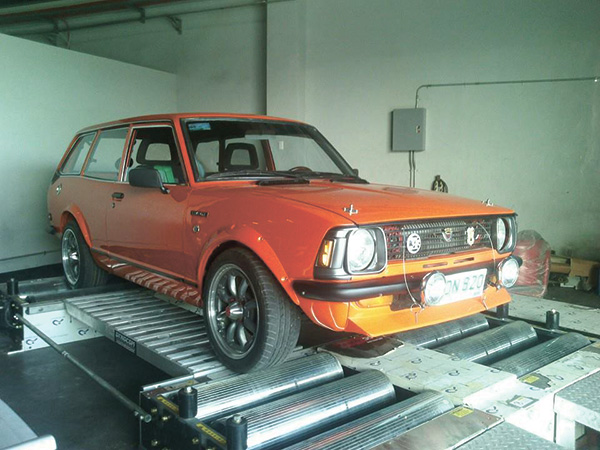
Speaking of Group B Automotive and Tuning, this auto shop now has a fully operational all-wheel drive mechanically linked eddy current dynamometer (dyno for short). This is the first one of its kind in Cebu and is a very powerful tool. Most of the dynos in the country, all of which are in Manila, are the inertia type.
There is a big difference between the inertia and an eddy current dyno. The load on an inertia dyno is fixed, which is the weight of the roller itself. On the other hand, the load of an eddy current dyno is via an electronic eddy brake, also called a power absorption unit (PAU). Thus, with an eddy current dyno, load could be adjusted to simulate different situations, making the dyno not only a tool for reading horsepower and torque, but a tool for diagnosing a car’s problem in a controlled environment.
For example, if a car has an overheating problem on uphill roads, after fixing the car, the technician needs to test it on an uphill road, like going to Busay. With an eddy current dyno, all the technician has to do is to mount the car on the dyno and increase the load to simulate an uphill road. Modern cars have a diagnostic port, and with the proper scan tool, a technician can plug it in the diagnostic port and read all the relevant parameters needed to diagnose a problem of a car. With an eddy current dyno the auto technician can look at the data while the car is running under different simulated conditions. This way he can concentrate on his work and not on the road.
SARAO PROTOTYPE 1. The Sarao family has been building Jeepneys for many years now. They have been building them as far as I can remember. One of the grandsons of the Sarao family, as part of his college thesis in industrial design, built what is called the Sarao Prototype 1. It is supposed to be a modern Jeepney. I really admire his effort for doing such a big undertaking. However, I am completely unimpressed with the finished product. This prototype modern jeepney is based on a Nissan Patrol Safari. The Nissan Patrol Safari is a car of the 90s and we are in 2014, so there goes modern out the window.
Being based on the Nissan Safari, the prototype uses the in-line six diesel engine and still retains 4WD, so it means goodbye to fuel efficiency and cleaner emissions. The positive thing that this modern Jeepney has is that it is air-conditioned, something that should have been done to jeepneys 20 years ago. Modern mass transportation systems must be efficient, safe and pollution free. The jeepney, which is a source of Filipino pride, now belongs in a museum. We have to modernize.
MICRO CARS. Most of the car companies in the country have their own micro cars. The lastest car company to have a micro car is Honda. They just launched the Brio. With the number of choices we have with these small-engined lightweight cars, I do really hope their sales would pick-up, as these micro cars are fuel efficient and take up a lot less space on the road.
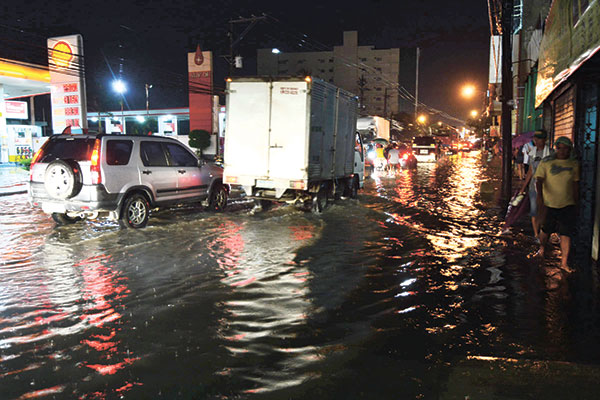
What turns potential customers off from purchasing these micro cars is not the quality of these cars, but the quality of our roads. We have potholes that are bigger than these cars, which of course, can destroy these cars. Government needs to make good quality roads. Having quality roads would result in less traffic, less pollution, less fuel consumption, less road maintenance.
But having quality roads would also mean less government contracts and, therefore, less commissions and kickbacks to government officials, which would be a big economical disadvantage to these government officials.