Hyperfocal distance
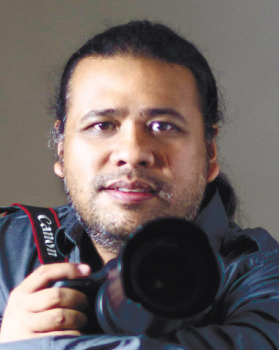 Albert Pedrosa
Photo Mania
FEW weeks ago, I was asked to talk about post processing by Cebu Images Camera Club headed by Kenneth Sy. I was surprised to see my pioneering students Erwin Lim and Ted Madamba. Both representing Nikon and Fujifilm, respectively. They were the first ones to enroll on photo editing 4 years ago in my training center.
You wouldn’t believe that those on top are the ones more active in learning more. Out of the many photographers who attended, I’m getting questions one after the other from these two. The level of interest is just inspiring even with all their recognition received from different award giving bodies.
In the middle of our discussion, I got an out of topic question from one of the attendees. The question was: Can focusing points affect sharpness of foreground and background given the many focusing points available today in modern cameras? I have to admit, the question was confusing at first.

The question arose from the thought that todays camera has more focusing points. Some photographers confuse the benefits related to depth of field. It’s easy to get confused especially if multiple of points blink all together. Presenting the analogy that all those parts of the scene that blinked will be focused.
No. Those focusing points that blinked together means that they are all in the same distance from the camera. Yes, they’ll all be focused but not the neighboring area. Focusing is always distance based. If you intend to get focused elements before and after the focused distance, that’s all about depth of field which is controlled by your aperture.
If you set your aperture at a particular f-stop in combination with your focal length and focusing, you should be able to know how far or near from the focused object will be sharp. Old school photographers are master in this technique since they are used to working with manual lens. Often times, they just estimate the distance and shoot without focusing anymore.
There’s an app that can help you compute for the right hyperfocal distance since it’s not something you compute in your head. Although you can always base it on experience for faster response time. The rule of thumbs is the higher the number of your aperture, the greater your depth of field and estimate the focusing distance one-third of the depth of field.
If you still find it confusing, drop your questions at grp.ph/forum.
Keep on shooting everyone!
www.grp.ph | photomania.sunstar@gmail.com