
Open city, on the street
 Lawrence Ypil
Dog-ears in the wrong notebook
RECENTLY, I’ve been thinking about walking. About walking, yes, as a means of getting from one place to the next, of getting from here to there, but also walking as a way of experiencing the world, if you will, as a way of being: slowly, step by step, to the rhythm of one’s breathing.
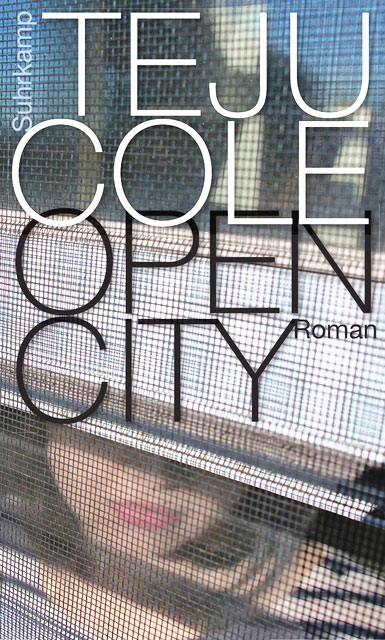
I blame this preoccupation with walking, this walking, preoccupation, partly on just having finished reading a novel by Teju Cole called Open City. It is the story of a young man, a psychiatry resident, named Julius who finds himself taking longer and longer walks after work, at night, around the city of New York. Although “story,” perhaps, is too generous a word to describe this novel, because, truth be told, there is hardly any “story” here — especially if we are to think of “story” as being a series of spectacular death-defying events, leading up to a terrifying climax, and its tragic inevitable end. There is hardly any end, as there is hardly any beginning, as the novel is a just a series of sometimes aimless walks around the city. Julius leaves work, walks around, and comes home to his apartment. Julius meanders into dark corners (there are many in New York, and alternately in Brussels and Lagos) and returns to his room. “Out on a limb” (the limb on this case being his feet) then back in.
 It is in this series of retrievals, however, these aimless saunters into the streets, that Julius gathers the many voices of the city. He talks to illegal immigrants, aging mentors, friends of friends from his past.
Through their stories he writes a novel of history. For isn’t history just that? Voices gathered then dispersed. Stories collected then passed on from one person to another, sentence by sentence, street by street.
In the past week, I had the pleasure of walking around the older streets of downtown Cebu, when I had to take a friend from out of town around the city. Sometimes, it takes a tourist to get us walking. Sometimes, it takes someone from afar to make us see our homes again, and remind us about what we in fact actually remember: the names of streets: Jakosalem, Magallanes, Mabini. The names of places: Parian, San Nicolas, Oriente Cinema, which used to be Teatro Junquera, Plaridel St., which used to be G. de Garay, Tinago, hidden. On foot, there is always the possibility of rediscovering the history of what used to be.
In Teju Cole’s novel, the protagonist gets off at the wrong subway stop and discovers an old burial ground of slaves that have been covered by the buildings of New York’s financial district. Bodies of survivors of the middle passage are lain carefully, side by side facing east. When the insistent demand of progress is to look up, up into the high rises being built in our cities, he reminds us of the need to look at places, retrieve stories that lie at the level of our feet.
In the past few weeks, in the midst of the Sinulog festivities, many of us have found ourselves returning to the older parts of our city. I suspect we come back every year not just to rekindle our devotions or fling our hopes after a difficult year, but also to walk the walk, dance the dance, to remind of us stories as we meet each other on foot, in the streets.

